

How to Protect a Marble Kitchen Island Well

A marble island earns its place at the center of the kitchen. It catches morning light, supports holiday prep, and gives the room a finish that manufactured materials cannot quite duplicate. It also sees lemon juice, red wine, cooking oil, hot pans, backpacks, and plenty of hurried cleanup. To protect a marble kitchen island, you need more than a bottle of sealer. You need the right daily habits, realistic expectations, and a plan for handling damage before it becomes part of the surface.
Marble is a natural calcium-based stone. That is what gives it its character, but it also makes it vulnerable to acids, moisture, abrasion, and harsh cleaners. The good news is that most kitchen damage is preventable, and much of the damage that does occur can be professionally corrected.
What Can Damage a Marble Kitchen Island?
The two problems homeowners most often confuse are staining and etching. They require different solutions.
A stain happens when a substance absorbs into the stone. Oil, coffee, wine, berries, and dark sauces can leave discoloration, especially if the marble is unsealed or the spill sits for too long. A quality penetrating sealer helps slow absorption, giving you time to wipe spills away before they settle in.
Etching is a chemical reaction on the surface of the marble. Lemon, vinegar, tomato sauce, wine, soda, and many common household cleaners can dull the polished finish within minutes. An etch often looks like a pale spot, a ring, or a rougher patch that catches light differently from the surrounding stone. Sealer does not stop etching. This distinction matters because repeatedly sealing an etched surface will not restore its shine.
Scratches, chips, and worn traffic patterns are another concern. Sliding heavy appliances, setting down rough ceramic cookware, or using the island as a landing spot for keys and tools can create small but visible marks. Over time, even routine use can make a once-uniform finish look uneven.
Protect a Marble Kitchen Island With Daily Habits
The most effective protection is simple and consistent. Wipe spills as soon as you notice them, particularly anything acidic, oily, or strongly colored. Blot rather than scrub, then follow with a soft microfiber cloth dampened with clean water. Scrubbing can spread the spill and work grit across the surface.
For regular cleaning, use a pH-neutral stone cleaner formulated for natural stone. Avoid vinegar, citrus-based sprays, bleach, ammonia, abrasive powders, and multipurpose kitchen cleaners unless the label specifically states they are safe for polished marble. A product can smell clean and still quietly damage the finish.
Use cutting boards for every knife task. Even if a knife does not leave a deep scratch, the repeated contact can wear the polish. Trivets and heat pads are worthwhile for hot cookware as well. Marble handles heat better than many surfaces, but sudden temperature changes and rough pan bottoms are unnecessary risks.
A few practical rules make a noticeable difference:
Keep coasters or trays under bottles of olive oil, vinegar, wine, and hand soap.
Place a protective pad under small appliances that are moved often, such as mixers and coffee machines.
Use felt pads beneath decorative objects, fruit bowls, and countertop organizers.
Never drag cast iron, stoneware, or heavy serving pieces across the island.
These are small adjustments, but they prevent the kind of scattered wear that makes marble look tired long before its time.
Seal Marble for Stain Resistance, Not Etch Prevention
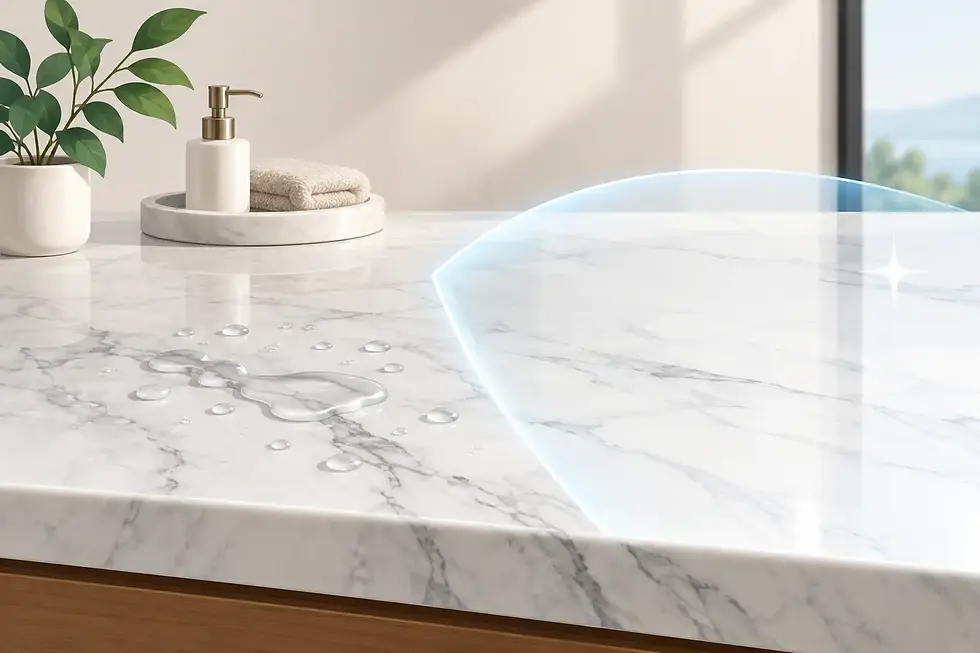
A professional-grade penetrating sealer is one of the best tools for protecting a marble kitchen island from stains. It works below the surface, helping reduce the stone's ability to absorb liquids. It should not create a thick topical coating or make the marble look plastic-like.
How often marble needs sealing depends on the stone, its finish, how it was installed, and how the island is used. Some dense marbles may need attention less often than more porous varieties. Rather than following a rigid calendar, perform a simple water test. Place a few drops of water on a clean, dry section of the island and watch for several minutes. If the water darkens the stone quickly, it may be time for evaluation and resealing.
Do not assume more sealer is always better. Applying sealer over residue, using the wrong product, or leaving excess material on the surface can create streaks and haze. Professional application is especially valuable on a large island with a polished finish, prominent veining, or previous staining issues.
Consider Anti-Etch Protection for Busy Kitchens
For households that truly use the island hard, anti-etch protection can be a smart upgrade. This treatment creates a more resilient barrier against acidic foods and beverages while preserving the appearance of the marble. It is especially useful for families with young children, enthusiastic home cooks, frequent entertainers, or anyone who wants the look of marble without constant worry over every lemon wedge.
There is a trade-off: protective treatments are an investment, and the right solution depends on the stone's finish, condition, and the look you want to maintain. A professional should inspect the island first. The goal is not to cover up marble's natural beauty, but to give it a better defense against the kitchen's everyday demands.
If the marble already has etches, scratches, or dull areas, restore those issues before applying protection. Otherwise, you are protecting a damaged finish instead of bringing the surface back to life first.
Know When Cleaning Is No Longer Enough
A homeowner can manage fresh spills and routine cleaning, but certain symptoms call for professional stone restoration. Dull rings around the sink or prep area, cloudy patches, stubborn stains, rough etched spots, deep scratches, chips along the edge, and inconsistent shine are all signs that the surface needs more than another cleaning product.
Professional marble polishing and repair can level etched areas, refine scratches, remove or reduce stains, repair chips, and restore a consistent finish across the island. The work requires trained technicians, specialized abrasives, controlled polishing techniques, and the ability to match the surrounding sheen. Improper refinishing often leaves swirl marks, uneven gloss, or an over-polished section that stands out even more than the original damage.
For homeowners in the Pittsburgh area, The Rock Doc approaches marble like a surface diagnosis, not a one-size-fits-all cleaning job. The condition of the stone, type of damage, finish, and daily use all guide the restoration and protection plan.
Build a Maintenance Plan Around How You Use the Kitchen
A marble island in a lightly used kitchen needs a different care plan than one at the center of daily cooking, school projects, and weekend entertaining. Start with daily wipe-downs using stone-safe products. Check the surface periodically for water absorption, dull spots, or new scratches. Address small issues early, before they spread or become more difficult to blend.
It is also wise to teach everyone in the household the basics. Marble does not need to be treated like a museum piece, but it does need informed care. When family members understand why acidic cleaners are off limits and why spills should be wiped quickly, the island stays beautiful with far less effort.
A marble kitchen island should show the life of a well-used home, not the damage of avoidable neglect. With smart habits, professional-grade stain protection, and timely restoration when needed, the surface can remain a confident focal point for years. If you notice the shine changing, do not wait for the next gathering to reveal the problem. Early care is usually the cleanest path back to beautiful stone.


Comments