
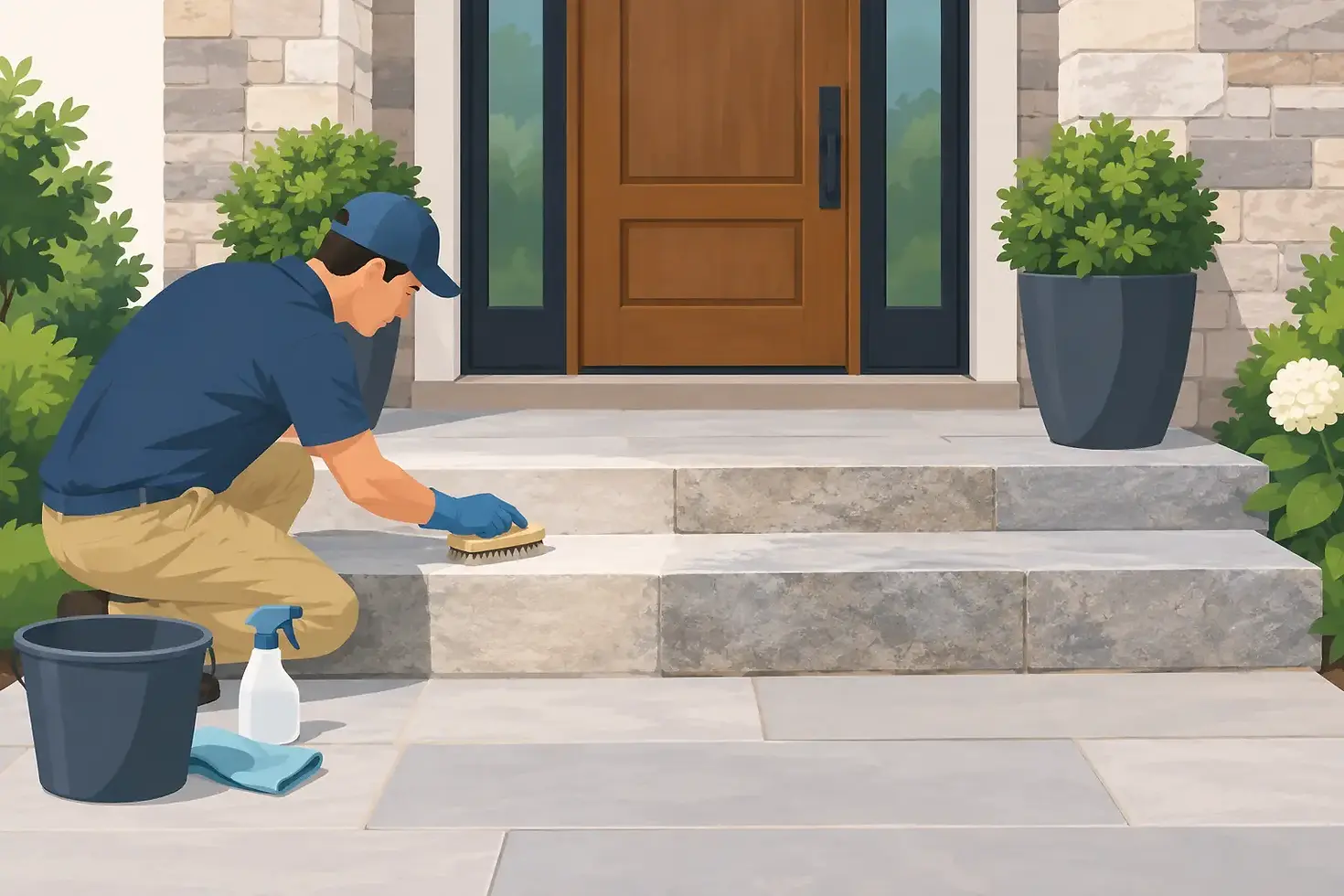
How to Restore Stone Entryways Without Causing Damage

A stone entryway makes an impression before anyone reaches the front door. But it also takes the hardest daily abuse: wet shoes, road salt, grit, furniture movement, pet traffic, and cleaning products that may be too aggressive for the surface. Knowing how to restore stone entryways starts with one rule: identify the stone and the damage before trying to clean or polish anything.
A dull marble foyer, stained travertine threshold, or scratched granite landing may look like it needs a stronger cleaner. Often, that is exactly what makes the problem worse. Natural stone restoration is a diagnosis-first job. The right process can bring the stone back to life; the wrong one can create permanent etching, uneven shine, or a patchy finish that is more difficult to correct.
Start With a Stone and Damage Assessment
Stone is not one material. Marble and travertine are calcium-based stones that react to acidic products. Granite is generally harder and more acid-resistant, but it can still be stained, scratched, or left hazy by residue and failed coatings. Slate, limestone, terrazzo, and engineered stone each have their own cleaning and restoration requirements.
Before any work begins, inspect the entryway in natural light and with the surface dry. Look for whether the issue is sitting on the stone, trapped in the stone, or physically changing the surface itself. A professional assessment usually separates the symptoms into a few categories: embedded soil and salt residue, stains, dull traffic paths, scratches and chips, etching, loose grout, and failing sealer.
A simple water test can offer one helpful clue. Place a few drops of water on a clean, dry area. If the water darkens the stone quickly, the surface may be due for sealing. This does not diagnose every issue, however, and it does not mean a sealer will repair existing damage. Sealers help resist future staining. They do not restore shine, remove scratches, or erase etching.
Clean the Entryway Without Attacking the Stone
The first restoration step is controlled cleaning, not polishing. Grit is abrasive, so thoroughly vacuum or sweep the entryway before introducing water or cleaner. Rubbing wet grit across polished stone can create a new field of fine scratches.
Use a pH-neutral cleaner made for natural stone, diluted as directed, with clean water and a soft microfiber mop or non-abrasive pad. Let the cleaner dwell only as long as recommended, then remove the dirty solution rather than allowing it to dry back onto the floor. In entryways, a second rinse is often necessary because winter deicing residue and tracked-in soil can leave a film that dulls the finish.
Avoid vinegar, lemon, bathroom cleaners, rust removers, powdered scouring products, and most "all-purpose" cleaners. On marble, travertine, and limestone, acids can chemically etch the surface within minutes. The result is not simply a stain. It is a change in the stone's finish, often visible as pale, cloudy, or dull marks.
Steam cleaning also deserves caution. It may seem like a clean solution, but high heat and pressure can affect grout, force moisture into vulnerable areas, and interfere with some sealers or repairs. The safest approach depends on the stone, installation condition, and product already on the floor.
When a Stain Needs More Than Cleaning
A stain is different from dirt. Oil, leaf tannins, rust, pet accidents, and colored spills can migrate below the surface, particularly in porous travertine and limestone. Scrubbing harder rarely pulls it out. It may spread the discoloration, damage the finish, or drive contaminants deeper.
Professional stone technicians use stone-appropriate poultices and targeted stain treatments based on the contaminant. The process may need more than one application, especially with older stains. Rust is particularly tricky because the wrong remover can etch calcium-based stone while failing to fully remove the color.
Restore Dullness, Etching, and Scratches at the Surface
Once the entryway is truly clean, the restoration method depends on the finish and the depth of damage. This is where a do-it-yourself approach has the greatest risk.
Polished marble and travertine can lose reflectivity in walking paths and around doorways. Acidic residues, wet shoes, and repeated abrasive soil leave the surface looking flat or cloudy. Light damage may respond to professional honing and polishing. Deeper scratches, lippage between tiles, or uneven prior work can require a more complete mechanical restoration to create a consistent finish across the entire entryway.
Honing uses progressively refined abrasives to remove a controlled amount of damaged material. Polishing then rebuilds the desired sheen. This work requires the correct equipment, diamonds, chemistry, and technique for the stone. A consumer polish may temporarily add shine, but it can leave a coating, exaggerate swirl marks, or produce glossy spots that do not match the rest of the floor.
Granite entryways present a different challenge. They may be polished, honed, flamed, or textured, and each finish needs a compatible process. A polished granite floor can sometimes be restored through specialized mechanical polishing. A textured surface may need deep cleaning and color enhancement rather than a high-shine treatment. Trying to make every stone glossy is a common mistake. The goal is to restore the finish the stone was designed to have.
Repair Chips, Cracks, and Loose Areas Before Sealing
A chipped edge at a threshold or a crack across a tile should be stabilized before final cleaning and sealing. Skilled repair can color-match fillers or epoxies to make localized damage far less noticeable. The repair must be leveled and finished to blend with surrounding stone, not simply filled and left raised.
If tiles sound hollow, grout is cracking repeatedly, or there is movement at the doorway, the issue may be related to the substrate or moisture rather than the stone surface alone. Surface restoration can improve appearance, but it cannot correct a failing installation underneath. Addressing movement first protects the investment in repair work.
Seal for Protection, Not a Plastic-Looking Finish
After the stone has been cleaned, restored, and allowed to dry properly, a penetrating sealer can improve resistance to water-based and oil-based staining. It is especially useful on porous stone and grout in a high-traffic entryway.
Sealer selection matters. An impregnating sealer is designed to absorb below the surface and preserve the stone's natural appearance. A topical coating sits on top and can create an artificial shine, peel under traffic, trap dirt, or become slippery when wet. For most premium stone entryways, a breathable penetrating sealer is the more dependable choice.
A sealer must also be applied evenly and buffed completely from the surface. Excess product can dry into streaks or hazy residue, especially on polished stone. This is one reason professional application is worthwhile after a full restoration: the finish is protected without sacrificing the clean, natural character of the stone.
Keep a Restored Entryway Looking Its Best
A restored entryway stays attractive when daily wear is managed before it becomes surface damage. Use high-quality walk-off mats outside and inside the door, but avoid rubber or vinyl backings that can discolor some stone finishes. Shake out or vacuum mats regularly so they capture grit instead of holding it against the floor.
Clean spills promptly with a stone-safe cleaner and a soft cloth. For regular maintenance, dry dust mopping or vacuuming with a hard-floor setting is often more valuable than frequent wet mopping. When wet cleaning is needed, use a pH-neutral stone cleaner, clean mop water, and minimal moisture.
In western Pennsylvania, road salt and winter moisture deserve special attention. Salt crystals can abrade the finish, while repeated wet-dry cycles carry residue into grout joints and porous stone. More frequent gentle cleaning during the winter is safer than waiting until spring and attacking built-up grime with harsh chemicals.
When to Call a Stone Restoration Professional
Call a trained stone restoration professional when the entryway has widespread dullness, etched spots, deep stains, scratches, chipped edges, uneven shine, or damage from a previous cleaning or refinishing attempt. These conditions rarely improve with store-bought products, and experimentation can turn a repairable surface into a more involved restoration.
The Rock Doc approaches stone like a surface worth preserving, not replacing. With trained technicians, advanced equipment, and stone-specific products, restoration can often be completed efficiently while protecting the character and value of the installation.
Your entryway does not need to look brand new to look exceptional. It needs a clean, even, properly protected finish that welcomes people in and stands up to the next season of real life.


Comments