
When Should Stone Be Refinished? 8 Clear Signs

A marble floor can look clean and still look tired. A granite countertop can be structurally sound but covered in scratches that catch the light every morning. These are the moments when homeowners ask, when should stone be refinished rather than simply cleaned or sealed? The answer comes down to what has changed at the surface and whether ordinary maintenance can still correct it.
Refinishing is not a one-size-fits-all treatment. Marble, travertine, limestone, granite, quartz, and other hard surfaces respond differently to wear, chemicals, moisture, and previous repair attempts. A trained stone professional can diagnose the problem beneath the visible mark, then restore the finish without removing more material than necessary.
When Should Stone Be Refinished Instead of Cleaned?
Cleaning removes dirt, residue, and many surface stains. Refinishing corrects damage to the stone itself or to its finished surface. If a quality stone-safe cleaner improves the appearance only temporarily, or does not improve it at all, the issue may be beyond cleaning.
For example, a dull marble vanity may have soap film on it, but it may also have chemical etching from acidic products. A darker-looking kitchen counter may need its sealer refreshed, while a counter with rough chips or deep scratches may need repair and honing first. The right service starts with an accurate diagnosis, not a guess based on appearance alone.
8 Signs Your Stone Surface Is Ready for Refinishing
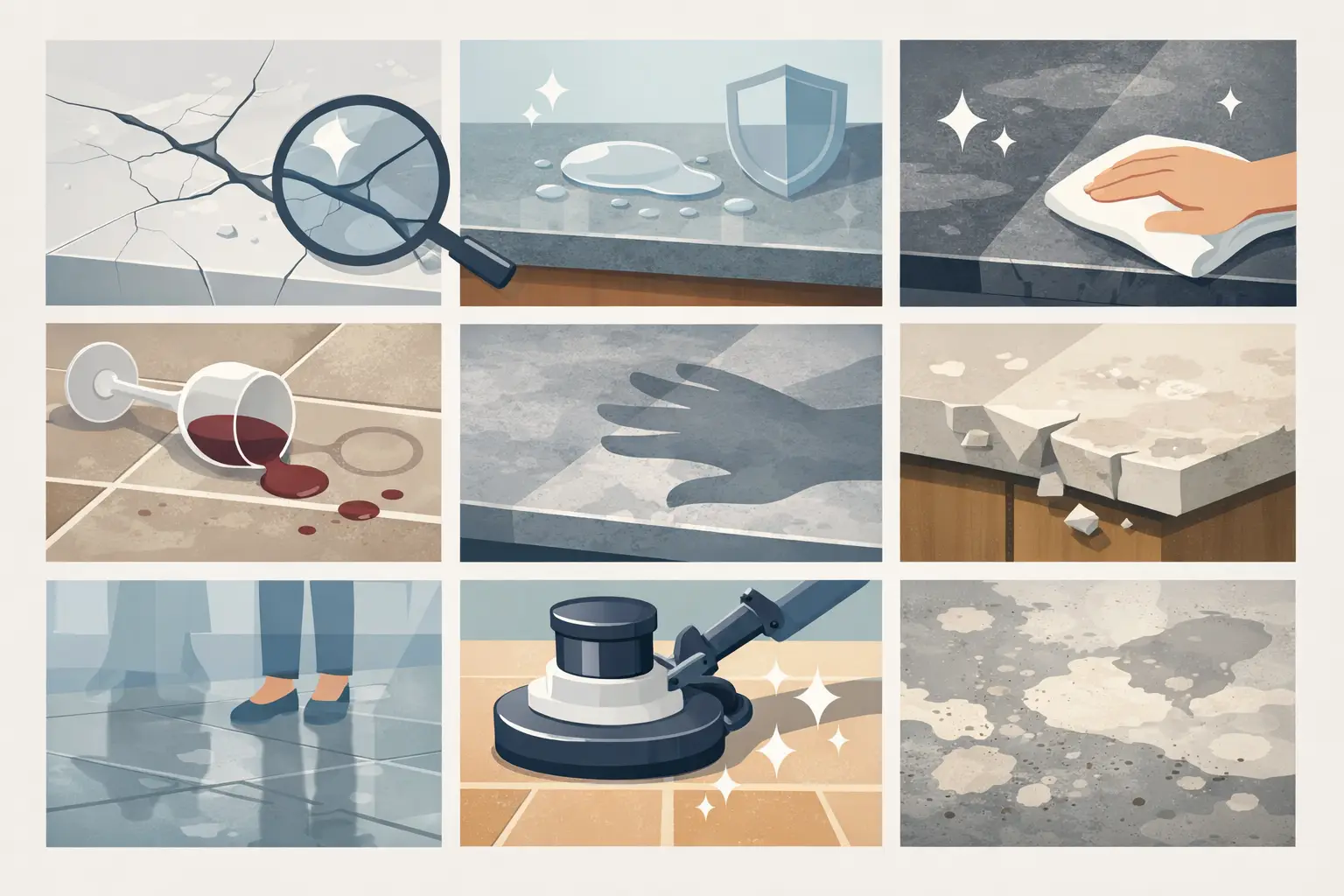
1. The finish looks dull in traffic areas
High-traffic stone floors often lose their shine first in entryways, hallways, and paths through the kitchen. You may notice that the floor reflects light near the edges of the room but looks flat or hazy where people walk most often. This is surface wear, not a cleaning failure.
Professional honing and polishing can level the worn finish and bring the stone back to a consistent appearance. On marble and travertine, this process can make a dramatic difference without replacing the floor.
2. Marble has cloudy spots, rings, or dull splashes
Marble is especially vulnerable to etching. Lemon juice, vinegar, wine, certain bathroom products, and even some popular household cleaners can react with the calcium in the stone. The result is usually a pale, dull, or cloudy area that looks different from a stain.
Etching changes the finish of the marble, so wiping it away will not work. Light etches may be corrected through polishing, while heavier etching often requires honing before the surface is repolished. If the same marks keep returning, adding anti-etch protection after restoration may be the practical next step.
3. Scratches are visible at normal viewing distance
A few fine marks are part of everyday life, particularly on busy kitchen counters. But scratches that are obvious from across the room, feel rough under a fingernail, or collect dirt are worth addressing. They can make an otherwise beautiful countertop look neglected.
Granite, marble, travertine, and engineered surfaces each require a different repair approach. Some scratches can be blended into the finish; deeper damage may need careful filling, honing, and polishing. Trying to buff these marks with a household abrasive can leave a larger, shinier, or more uneven patch.
4. Chips, cracks, or broken edges have appeared
A chipped counter edge, cracked floor tile, or damaged stone threshold should be evaluated promptly. Beyond the visual issue, exposed or uneven edges are more likely to catch on objects, collect soil, and sustain additional damage.
Refinishing may be part of the repair, but it is not always the entire solution. A proper restoration can include color-matched repair work, leveling, and finish blending so the repaired area belongs with the surrounding stone. The trade-off is that very large breaks, unstable pieces, or severe structural cracks may require replacement rather than cosmetic restoration.
5. The surface has uneven shine or blotchy color
Uneven shine is common after a do-it-yourself polish, an incorrect cleaning product, or a previous restoration performed without the right equipment. One section may look glossy while the surrounding stone looks matte. In other cases, a floor can look patchy because old coatings, waxes, or residue are holding dirt unevenly.
A professional can determine whether the problem is topical buildup, an inconsistent polish, or damage within the stone. Removing residue alone may solve the issue. If the finish itself is uneven, a controlled honing and polishing process is usually needed to create a uniform result.
6. Stains remain after proper cleaning
Not every stain calls for refinishing. Some are removable with the correct stone-safe treatment, and some discoloration is simply residue sitting on the surface. However, stains that have penetrated porous stone or remain after careful cleaning may need specialized restoration.
Travertine, limestone, and certain marble surfaces can absorb oils, rust, moisture, and colored spills. The treatment depends on the source of the stain and the stone's condition. Refinishing may be recommended when the stain is paired with etching, surface roughness, or widespread discoloration that cleaning cannot correct.
7. The stone feels rough, pitted, or uneven
Stone should not feel unexpectedly sharp, sandy, or rough in areas that were once smooth. On travertine, open pits and voids can become more noticeable as fillers wear down. On marble and limestone, chemical damage can leave a slightly rough texture even where the change in shine is subtle.
This is a good time to act before the affected area becomes harder to clean and more visually disruptive. Restoration can include filling voids, honing rough sections, and refinishing the surface to the appropriate sheen. A honed finish is often the better choice for active family areas because it is elegant but less likely to show every small future mark than a high polish.
8. Water no longer beads on the surface
When water darkens stone immediately or no longer beads at all, the protective sealer may be wearing off. This does not automatically mean the stone needs refinishing. If the surface is otherwise smooth, clean, and free of damage, professional cleaning and resealing may be enough.
But if water absorption is accompanied by dullness, staining, roughness, or traffic wear, refinishing before sealing is often the better investment. Sealer protects the condition that exists. It cannot restore shine, erase etches, or repair scratches.
How Often Does Stone Need to Be Refinished?
There is no calendar rule that applies to every surface. A formal marble entry floor used daily may need attention much sooner than a guest-bath marble vanity. A granite countertop may go years with only routine cleaning and periodic sealing, while a polished marble island exposed to cooking acids may show etching much sooner.
Usage, stone type, finish, cleaning habits, and prior maintenance all matter. In western Pennsylvania homes, winter grit and wet footwear can accelerate wear on stone entryways. Commercial lobbies, retail spaces, and multi-family common areas also experience a higher level of abrasion, making regular maintenance a sensible way to avoid more extensive restoration later.
Rather than waiting for a surface to look severely damaged, watch for a change in appearance or feel. Early refinishing is often more efficient because the restoration team can correct lighter wear with less aggressive work.
What Professional Stone Refinishing Should Accomplish
A good restoration should not merely make stone look shiny for a few days. It should correct the specific condition causing the problem and leave the finish consistent across the area. Depending on the surface, that may involve deep cleaning, stripping failed coatings, repairing chips, filling pits, honing away damage, polishing, and applying an appropriate sealer or protective treatment.
The desired result should also fit how you use the space. A mirror-like polish may be ideal for a formal marble foyer, while a satin or honed finish may be more forgiving on a busy kitchen floor. The best recommendation balances appearance, maintenance expectations, slip considerations, and the natural character of the stone.
For homeowners and facility managers, professional evaluation also prevents a common and expensive mistake: treating every problem with a store-bought polish, acidic cleaner, or topical coating. Those products can hide the real issue briefly, create residue, or make a later restoration more involved.
Protect the Result After Refinishing
Once stone has been restored, everyday habits make a difference. Use cleaners formulated for natural stone, wipe acidic spills from marble promptly, use mats where grit enters the building, and avoid abrasive pads. Countertops benefit from trivets, cutting boards, and quick attention to oils and colored spills.
The Rock Doc helps property owners bring worn stone back to life with trained technicians, advanced equipment, and restoration plans built around the surface in front of them. Whether the issue is a dull marble floor, etched vanity top, scratched granite counter, or tired travertine entryway, timely care can preserve the stone's beauty and protect the investment beneath your feet and hands.
If your stone no longer looks or feels the way it should, do not wait for damage to become the new normal. A professional assessment can clarify whether cleaning, repair, refinishing, sealing, or a combination of services will give the surface its best next chapter.


Comments