

Best Ways to Revive Granite and Bring Back Its Shine

A granite countertop can look tired long before it is truly worn out. The best ways to revive granite depend on what you are actually seeing: a hazy film, dark water spots, faded color, stubborn stains, chipped edges, or scratches from years of daily use. A good diagnosis matters because granite is durable, but the wrong cleaner or repair method can leave a lasting mark on an otherwise valuable surface.
Granite does not usually lose its shine in the same way marble does. It is harder and more resistant to acidic damage, so a dull appearance often points to residue, worn sealer, abrasion, poor cleaning habits, or an issue with the finish itself. The right treatment can bring your stone back to life without unnecessary grinding, coating, or replacement.
Start by Identifying What Is Dulling the Granite
Before reaching for a polish, look closely at the surface in daylight. If the countertop looks cloudy or streaky but feels smooth, the issue may be a buildup of soap, cooking oil, hard-water minerals, or an overused granite spray. Many household products leave behind ingredients intended to create shine, yet repeated application can create a film that makes polished stone look muted.
If water darkens the granite quickly and remains visible for several minutes, the sealer may be weakening. This does not always mean the granite is damaged. It means the stone may be absorbing moisture more readily than it should, increasing the risk of stains from oil, wine, coffee, or food preparation.
A rough spot, visible scratch, chip, or crack is different. Those conditions call for repair, not just cleaning or sealing. Likewise, a countertop that looks unevenly glossy may have been improperly refinished in the past or treated with a topical coating that is now wearing away.
Clean Away Residue Before Trying to Restore Shine
The simplest granite revival often starts with a thorough, stone-safe cleaning. Use a pH-neutral cleaner made for natural stone and a clean microfiber cloth. Wipe the surface with enough solution to loosen residue, then buff dry with a second microfiber cloth. Leaving cleaner to air-dry can create streaks, especially on darker granite.
Avoid vinegar, lemon juice, abrasive powders, bleach-heavy cleaners, and general-purpose degreasers unless they are specifically approved for natural stone. Granite can tolerate more than softer stones, but repeated exposure to harsh chemicals can weaken the sealer, dull the finish, or affect resins and fillers in certain slabs.
For greasy areas around a range or kitchen island, a professional-grade stone cleaner may be needed to remove built-up oils without stripping protective treatments. This is especially common in kitchens where countertop sprays, dish soap, and cooking residue have accumulated over time. Cleaning first gives you an honest view of the stone’s condition.
Do Not Mistake a Coating for a Polish
Homeowners sometimes try to solve dull granite with waxes, furniture polish, acrylic shine products, or countertop coatings. These products may create a temporary gloss, but they do not restore the stone’s original finish. They can attract dirt, show streaks, yellow over time, and make future professional restoration more involved.
Natural stone should look good because its finish is clean, properly honed or polished, and protected with the right sealer - not because it has been covered by a film. If a countertop becomes tacky, uneven, or hazy after using a shine product, the coating may need to be safely removed before the granite can be restored correctly.
Reseal Granite When Water No Longer Beads Up
Sealing is one of the best ways to revive granite when the stone looks dry, absorbs spills quickly, or has become more difficult to keep clean. A penetrating stone sealer works below the surface to reduce absorption while allowing the material to breathe. It is not a glossy topcoat, and it should not noticeably change the texture of properly finished granite.
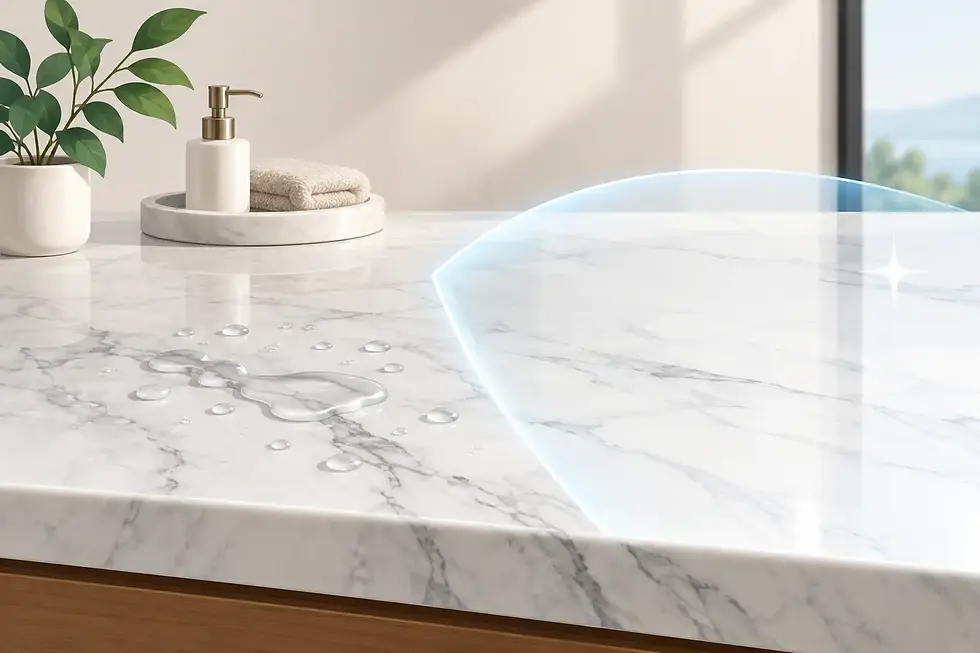
A simple water test can help. Place a few drops of water in an inconspicuous area and watch what happens. If the water beads and remains on top for several minutes, the existing protection may still be doing its job. If the granite darkens quickly, it may be time for sealing.
The trade-off is that not every granite surface needs frequent resealing. Dense, polished granite may hold a sealer for years, while lighter, more porous material or honed granite may need attention sooner. Applying too much sealer or failing to remove excess product can leave a hazy residue. For a large kitchen, natural-stone floor, or commercial surface, professional application is often the safer choice.
Treat Stains According to Their Source
A dark spot near a sink, cooktop, or favorite prep area may be an absorbed stain rather than a surface mark. Oil-based stains typically darken the stone. Organic stains from coffee, fruit, or food may leave brown, pink, or reddish discoloration. Rust and mineral stains require a different approach entirely.
The key is patience. Surface scrubbing may not reach a stain that has traveled into the stone. Stone restoration professionals often use a poultice, a specialized absorbent treatment designed to draw staining material out gradually. The correct formula depends on the stain and the granite, which is why guessing with household chemicals can make the problem worse.
Do not use acidic rust removers, bathroom cleaners, or aggressive bleach treatments on a valuable granite surface without expert guidance. What appears to be a stain could also be a natural mineral variation, a fracture fill, or discoloration caused by an old coating.
Repair Chips, Cracks, and Scratches Instead of Hiding Them
Granite is tough, but it is not indestructible. Chips around sink cutouts and edges are common because those areas take repeated impact. Cracks can develop near cooktops, seams, or unsupported overhangs. A dropped pan can create a small chip that catches the eye every time you enter the kitchen.
Professional granite repair uses color-matched resin, careful leveling, and polishing techniques to blend damage into the surrounding surface. A quality repair is about more than filling a void. The color, translucency, texture, and sheen all need to work together. On patterned granite, this requires an experienced eye.
Light scratches may be reduced through localized refinement, but deeper scratches and uneven gloss need a more controlled process. Over-polishing a small area can create a visibly different spot, sometimes called a picture frame effect. This is one reason do-it-yourself polishing kits can produce disappointing results on premium countertops.
When Professional Granite Restoration Makes the Difference
Some granite issues are suitable for careful routine care. Others need trained technicians, advanced equipment, and the right restoration products. Consider professional help when the granite has widespread haze, recurring stains, worn areas around sinks, failed coatings, visible chips, cracks, or inconsistent shine after cleaning.
For homeowners and property managers in the Pittsburgh area, The Rock Doc approaches granite restoration like a surface diagnosis. The goal is to identify the source of the problem, correct it precisely, and protect the result for daily use. That may involve deep cleaning and sealing, targeted stain treatment, chip repair, surface refinishing, or a combination of services.
This approach also avoids unnecessary replacement. Granite replacement can mean demolition, plumbing disconnection, backsplash damage, and the challenge of matching existing materials. When the slab is structurally sound, skilled restoration is often faster, cleaner, and far more practical.
Keep Revived Granite Looking Its Best
Once granite has been restored, a few habits protect the investment. Clean spills promptly, especially oils and acidic foods. Use cutting boards rather than cutting directly on the countertop, even though granite is hard enough to resist many knife marks. Use trivets for very hot cookware, particularly near seams or repaired areas.
For daily cleaning, a damp microfiber cloth followed by drying is often enough. Use a stone-safe cleaner when needed, and skip products that promise instant shine or heavy disinfection unless they are appropriate for natural stone. In busy kitchens and commercial spaces, regular professional maintenance can prevent small issues from becoming expensive repairs.
Granite should feel solid, look clear, and complement the rest of the room without demanding constant attention. If yours is looking dull, stained, or damaged, the right diagnosis and restoration plan can make the surface look cared for again - and help it stay that way for years.


Comments