

Countertop Protection Films: What They Really Do

A marble island can look flawless at breakfast and show a new scratch or dull spot by dinner. Countertop protection films are designed to absorb that daily abuse before it reaches the surface beneath. But for stone and engineered-stone countertops, the right answer is not always to cover the surface with a film. The material, finish, use of the kitchen, and existing condition of the countertop all matter.
A protection film can be a smart preventive measure when selected and installed correctly. Applied to the wrong surface or used in place of proper restoration and sealing, it can create a false sense of security. The goal is not simply to hide your countertop under a layer of plastic. It is to preserve its appearance, make daily care easier, and protect the investment you made in your kitchen or commercial space.
What Countertop Protection Films Are Designed to Do
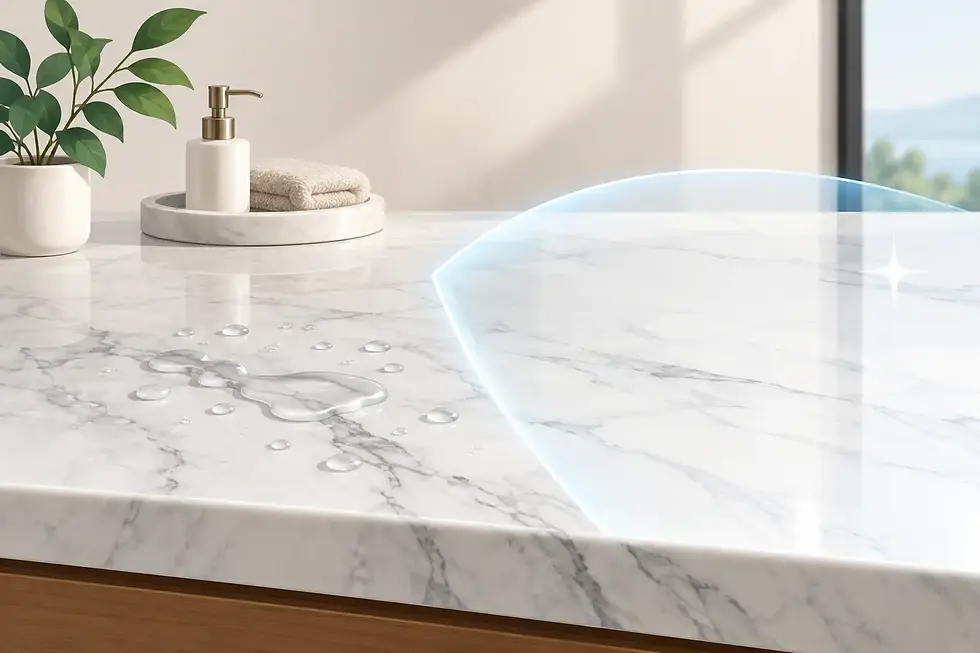
Countertop protection films are clear, durable surface layers applied over a countertop. Depending on the product, they may be designed to resist light scratching, staining, fingerprints, food spills, and wear from routine use. Some are temporary films used during construction or remodeling. Others are intended to remain in place for months or years.
The best products are nearly invisible when installed well. They can help shield high-contact areas such as an island overhang, coffee station, bar top, or the section beside a sink where dishes, appliances, and serving trays are constantly set down.
Film is especially useful when the concern is physical wear. It can reduce minor scuffs from sliding plates, small appliance feet, and everyday countertop traffic. It may also provide a barrier against a short-term spill. That does not mean it makes a countertop indestructible. A sharp knife, dropped cast-iron pan, or heavy impact can still damage both the film and the surface below.
Film and Sealer Solve Different Problems
One of the most common misunderstandings is assuming countertop film replaces a quality stone sealer. It does not. These products work in different ways.
A penetrating sealer is absorbed into porous stone, where it helps slow the absorption of liquids. It is commonly used on materials such as granite, marble, limestone, travertine, and some grout. A properly chosen sealer gives you more time to wipe up oil, wine, coffee, and other spills before they leave a stain.
A film sits on top of the surface. It creates a physical shield but does not address what happens at an exposed edge, seam, cutout, or uncovered section. If moisture or contaminants work under a poorly applied film, they may become difficult to clean. Film also does not correct etching, deep scratches, cracks, or dullness that already exist.
For marble, this distinction matters even more. Marble etching is a chemical reaction caused by acidic substances such as lemon juice, vinegar, tomato sauce, and many household cleaners. A quality film may reduce direct exposure where it is applied, but it is not a license to leave acidic spills sitting on the counter. Edges and unprotected areas remain vulnerable, and a damaged film needs prompt attention.
When a Protective Film Makes Sense
A protection film is worth considering when a countertop is in good condition and its owner wants to reduce wear in a specific high-use zone. It can also make sense after a professional restoration, when the surface has been properly cleaned, repaired, honed, polished, and prepared.
Families with young children often appreciate protection around snack areas, while homeowners who entertain frequently may want added defense on a marble bar or serving counter. In commercial settings, reception counters and food-service surfaces may experience repeated contact from bags, packages, displays, and cleaning routines that create gradual wear.
There are also practical temporary uses. During a kitchen renovation, cabinet replacement, painting project, or appliance installation, a temporary protection film can help prevent dust abrasion and accidental scratches. The key is removing it on schedule. A temporary product left in place too long can become difficult to lift cleanly, especially if heat, sunlight, or cleaning chemicals affect the adhesive.
Film is less appropriate when the countertop already has active problems. If stone is dull, etched, stained, cracked, or uneven from a prior refinishing attempt, covering it will not bring it back to life. Restoration should come first. Once the countertop is corrected, a stone specialist can help determine whether film, sealing, anti-etch treatment, or a combination of methods best fits the surface.
Choosing Film for Marble, Granite, Quartz, and Travertine
Every countertop material has its own risks. Marble and travertine are calcite-based stones that can etch from acids. Granite is generally harder and more resistant to scratching, but it can still stain if it is porous or improperly sealed. Quartz is nonporous but can be vulnerable to heat damage, discoloration from certain chemicals, and surface scratching. Engineered stone also has manufacturer care requirements that should be respected.
Before applying any film, consider the countertop's finish. A polished surface tends to show bubbles, dust, alignment errors, and trapped debris more clearly than a textured or honed finish. A honed marble counter may conceal light wear better, but it can still show darkened edges or uneven areas if liquids migrate beneath the film.
Heat is another major consideration. Do not assume a clear film is safe beside a cooktop simply because it is marketed as durable. Heat resistance varies widely. Hot pans, slow cookers, air fryers, and espresso machines can generate enough heat or steam to weaken adhesives, discolor film, or affect the countertop finish. Trivets and heat pads remain necessary.
Always review the film manufacturer's approved surfaces and care instructions. A product that performs well on glass or laminate is not automatically suitable for natural stone or quartz. When there is any doubt, testing a small, discreet area is far less costly than repairing a large countertop later.
Installation Determines the Result
The condition of the countertop before installation is just as important as the film itself. Oils, residue, dust, old waxes, and cleaning-product buildup can interfere with adhesion. Worse, debris trapped beneath a clear film can look like a permanent flaw.
Professional preparation starts with identifying the surface material and its condition. A stone professional may recommend deep cleaning, restoration, repair, or resealing before any protective layer is considered. The countertop must be thoroughly dry, because sealing in moisture near seams or edges can create problems that are not visible immediately.
Application requires careful measuring, trimming, and edge management. An island with a sink, cooktop, radius corners, waterfall panels, or multiple seams is not a simple peel-and-stick project. A poorly cut edge can collect grime, lift prematurely, or draw attention every time light hits the countertop.
If you choose a permanent or semi-permanent film, ask how it will be removed and what maintenance is required. Clear answers about adhesive behavior, expected lifespan, heat limits, cleaning products, and warranty coverage are part of a responsible recommendation.
Care Habits Still Protect Your Countertop Best
Even the most durable countertop protection films work best alongside sensible daily habits. Wipe spills promptly, especially on marble and travertine. Use cutting boards rather than cutting directly on stone. Place hot cookware on trivets, and avoid harsh cleaners, abrasive powders, and acidic products unless they are specifically approved for the surface.
Use a soft microfiber cloth and a stone-safe cleaner for natural stone. For quartz and other engineered surfaces, follow the manufacturer's care guidance rather than relying on a one-size-fits-all household cleaner. The wrong product can leave streaking, dullness, residue, or damage that a film cannot prevent.
Check film edges periodically, particularly near sinks and dishwashers where moisture and steam are common. If an edge lifts, dirt begins collecting underneath, or the film turns cloudy, address it early. Waiting can make removal more difficult and can allow contaminants to work against the finish below.
For homeowners in the Pittsburgh area who are unsure whether a countertop needs protection, restoration, or both, a professional evaluation can prevent an expensive guess. The Rock Doc approaches surface care like a diagnosis: identify the actual source of the problem, correct it precisely, and recommend protection that fits the way the countertop is used.
The best protection is the one that preserves the surface without creating a new maintenance problem. Before applying a film, take a close look at your countertop's material, current condition, and daily demands. That small decision can help keep a beautiful kitchen looking like it was cared for from day one.


Comments