
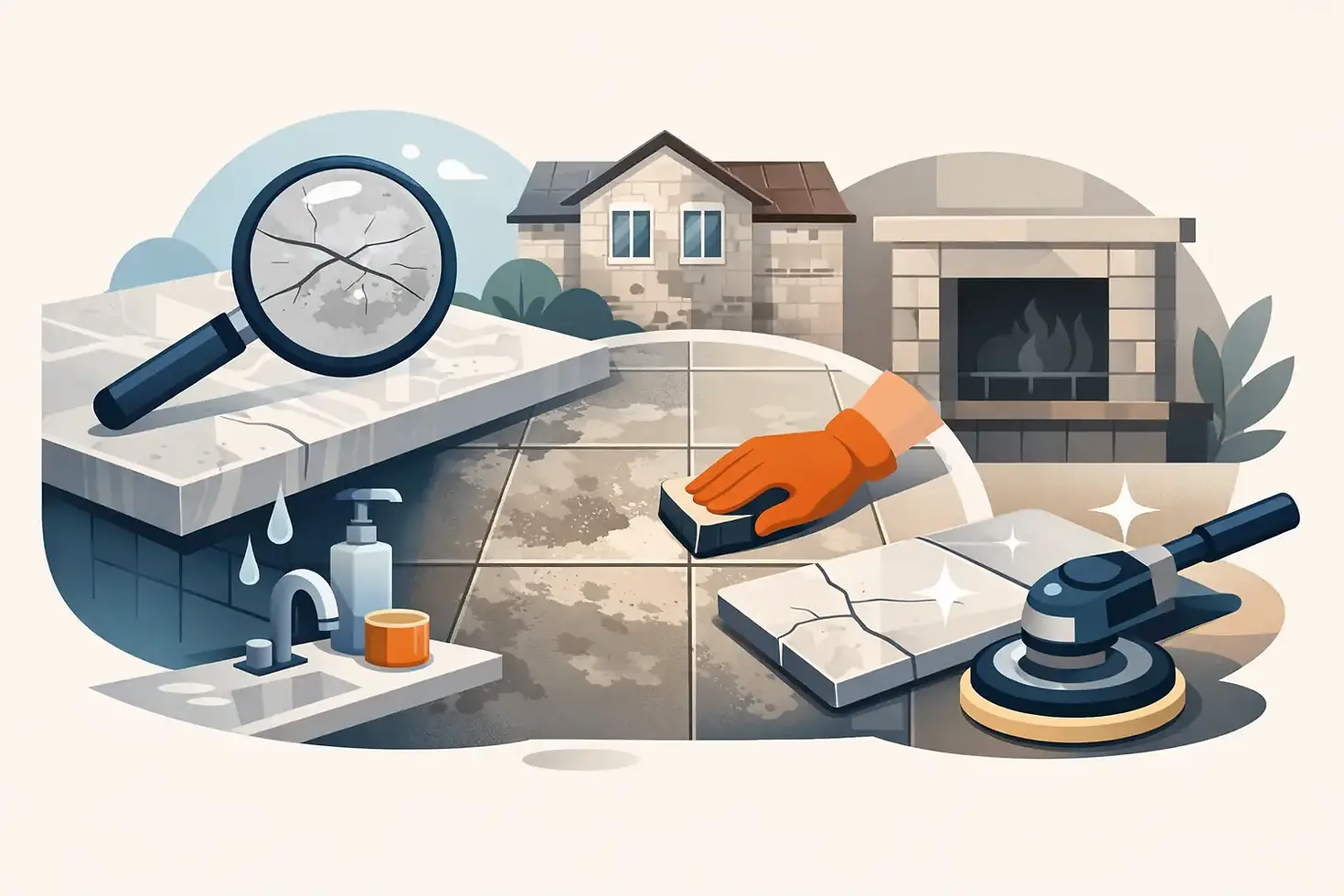
Top Signs Stone Needs Restoration at Home
- Leacon Digital
- Jul 30
- 5 min read

A marble floor can look clean yet still appear lifeless under the light. A granite countertop may feel rough around the sink, or a travertine entryway may show dark traffic paths that never seem to wash away. These are often the top signs stone needs restoration, not evidence that your surface is beyond saving. Natural stone is durable, but daily use, incorrect cleaners, moisture, and failed prior work can gradually change its appearance and performance.
Stone restoration is not a one-size-fits-all cleaning service. The right solution depends on the material, the source of damage, and whether the issue is confined to the surface or reaches deeper into the stone. Identifying the problem early can protect a major investment and prevent a manageable repair from becoming a replacement project.
Top Signs Stone Needs Restoration
1. The finish has turned dull, hazy, or uneven
A loss of shine is one of the most common calls for marble and polished travertine restoration. High-traffic lanes on floors often become visibly dull while edges and corners remain glossy. On countertops, the area beside the sink or cooktop may look cloudy compared with the rest of the surface.
This is not always dirt. Foot traffic gradually wears a polished finish, while residues from cleaners and hard water can leave a film that masks the stone's natural color and reflection. Professional honing and polishing can level the surface and restore clarity without the inconsistent results that come from store-bought shine products.
2. You see dull spots, rings, or splash marks on marble
If lemon juice, wine, vinegar, tomato sauce, or certain bathroom products leave pale, dull marks on marble, limestone, or travertine, the issue is usually etching. Acid reacts with calcium-based stone and changes the surface itself. It can happen in seconds, even when the spill is wiped up quickly.
Etching is often mistaken for staining, but it usually looks lighter or duller than the surrounding stone and may feel slightly different to the touch. A topical cleaner cannot reverse it. Depending on its severity, the surface may need targeted honing and polishing, followed by practical guidance or anti-etch protection for areas that see frequent use.
3. Stains remain after normal cleaning
A darkened area near a sink, a shadow beneath a plant, or a discolored spot around a cooking zone may indicate that a substance has entered the stone's pores. Oils, moisture, rust, food pigments, and pet accidents can all create stains, but each calls for a different treatment.
Trying several household chemicals can make the original issue worse, especially on sensitive stone. Some stains can be drawn out with specialized methods; others may need refinishing after the source has been addressed. The key is diagnosing whether you are looking at a true stain, etching, residue, or a problem beneath the surface before applying a treatment.
4. Scratches, chips, or cracks catch your eye or your hand
Fine scratches can make a polished floor look cloudy, while deeper scratches may collect dirt and become more noticeable over time. Chips along countertop edges, around undermount sinks, and near corners are also common. These problems are not merely cosmetic when they expose vulnerable edges or create places where moisture and debris can collect.
Cracks deserve particular attention. A small surface crack may be stable and repairable, but a crack that widens, runs through a seam, or appears alongside movement in tile can point to an installation or structural issue. A trained stone professional should assess the cause before cosmetic repair begins. Filling a crack without addressing movement may only hide the problem temporarily.
5. The stone feels rough, pitted, or worn away
Travertine naturally contains pits and voids, many of which are filled during installation. Over time, those fills can wear out, loosen, or become discolored. Marble and limestone can also develop rough areas from chemical damage, abrasive cleaning, or repeated wear.
When the surface no longer feels smooth under bare feet or catches on a cloth during cleaning, restoration may be needed. The proper process can clean the pores, repair missing fills where appropriate, hone damaged areas, and finish the stone to a consistent appearance. The goal is not to make every stone look artificial, but to bring back a clean, even, well-maintained surface.
6. Water no longer beads on the surface
Sealer is not a permanent shield, and it is not supposed to make every surface waterproof. Its purpose is to give you more time to wipe up spills before they penetrate. If water darkens the stone quickly or is absorbed in areas that once resisted moisture, the protective treatment may be wearing thin.
A simple water test can offer a clue, but it does not tell the full story. Surface texture, stone type, existing residues, and the sealer previously used all affect results. Before resealing, the stone should be thoroughly cleaned and evaluated. Applying more sealer over residue, damage, or an incompatible coating can leave the surface streaky or ineffective.
7. Previous repair work looks worse than the original damage
Uneven shine, visible swirl marks, patchy color, sticky coatings, and grout haze are signs that a surface may have been improperly refinished or treated with the wrong products. This is especially frustrating after you have already paid for service or spent time trying to improve the stone yourself.
Many of these issues can be corrected, but the repair process may require removing topical coatings or mechanically refining the surface to get back to sound stone. Restoration-first work focuses on correcting the underlying finish rather than covering it with a temporary gloss that wears away unevenly.
When Cleaning Is Enough and When Restoration Is Better
Not every dull spot requires full restoration. A surface with routine soil, soap residue, or hard-water buildup may respond well to the right professional cleaning product and a proper maintenance routine. This is why an accurate diagnosis matters. Aggressive treatment on a surface that only needs cleaning wastes time and can introduce new damage.
Restoration is the better path when the stone itself has changed. Etching, scratches, worn polish, open pits, chips, and failed coatings cannot be cleaned away because they alter the finish or structure of the surface. A qualified technician can determine whether a targeted repair is sufficient or whether a larger area needs honing and polishing for a uniform result.
Engineered surfaces require the same care in diagnosis. Quartz, for example, does not respond to polishing in the same way as marble. Dullness or staining on quartz may involve residue, chemical damage, heat exposure, or finish issues that need material-specific methods. The wrong approach can permanently change the appearance of the surface.
Protecting Your Restored Stone
Once a surface has been restored, everyday habits have a major effect on how long it stays beautiful. Use pH-neutral stone cleaners, wipe spills promptly, and avoid acidic or abrasive products unless they are specifically approved for your material. Mats in entryways, felt pads under furniture, and cutting boards in kitchens reduce the wear that leads to avoidable repairs.
For busy kitchens, commercial entries, and heavily used marble bathrooms, scheduled maintenance can be more cost-effective than waiting for damage to become obvious. The Rock Doc helps property owners match cleaning, sealing, and protective options to the way their stone is actually used.
Your stone does not have to look perfect to deserve professional attention. If a surface has lost its luster, feels damaged, or no longer cleans the way it once did, addressing it early gives you the best chance to bring it back to life and keep it looking that way.


Comments